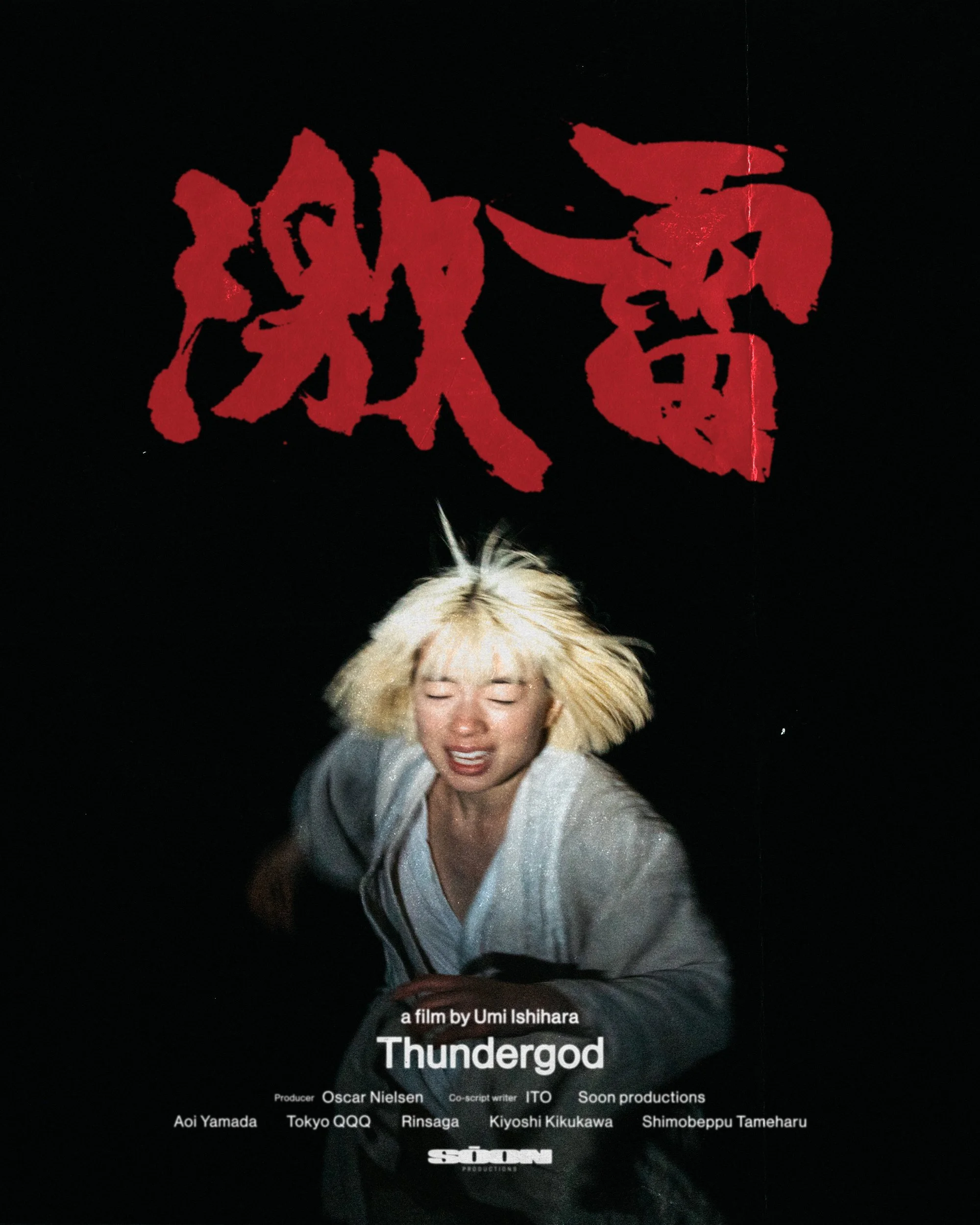
Thundergod, 18min 2025
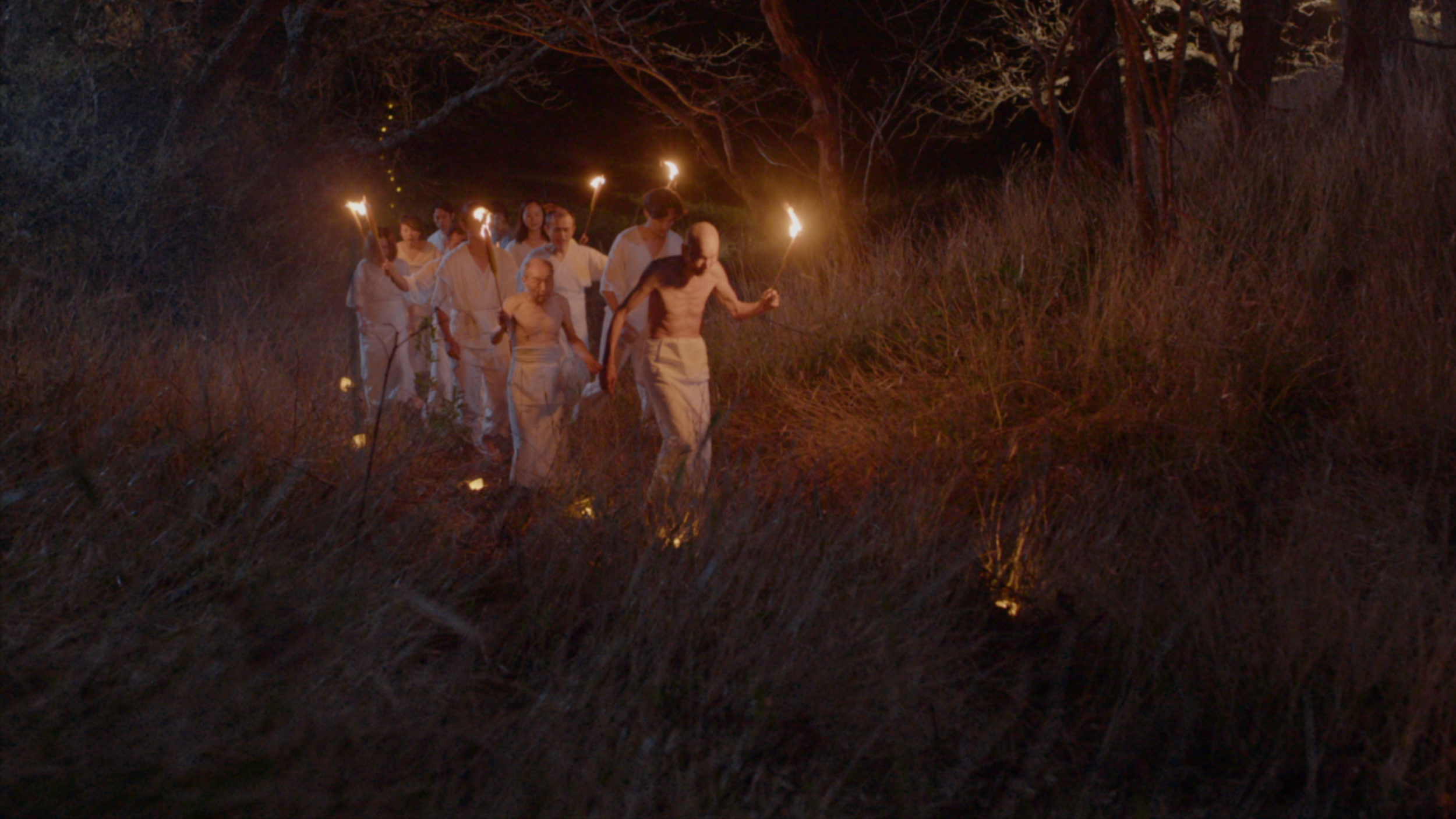
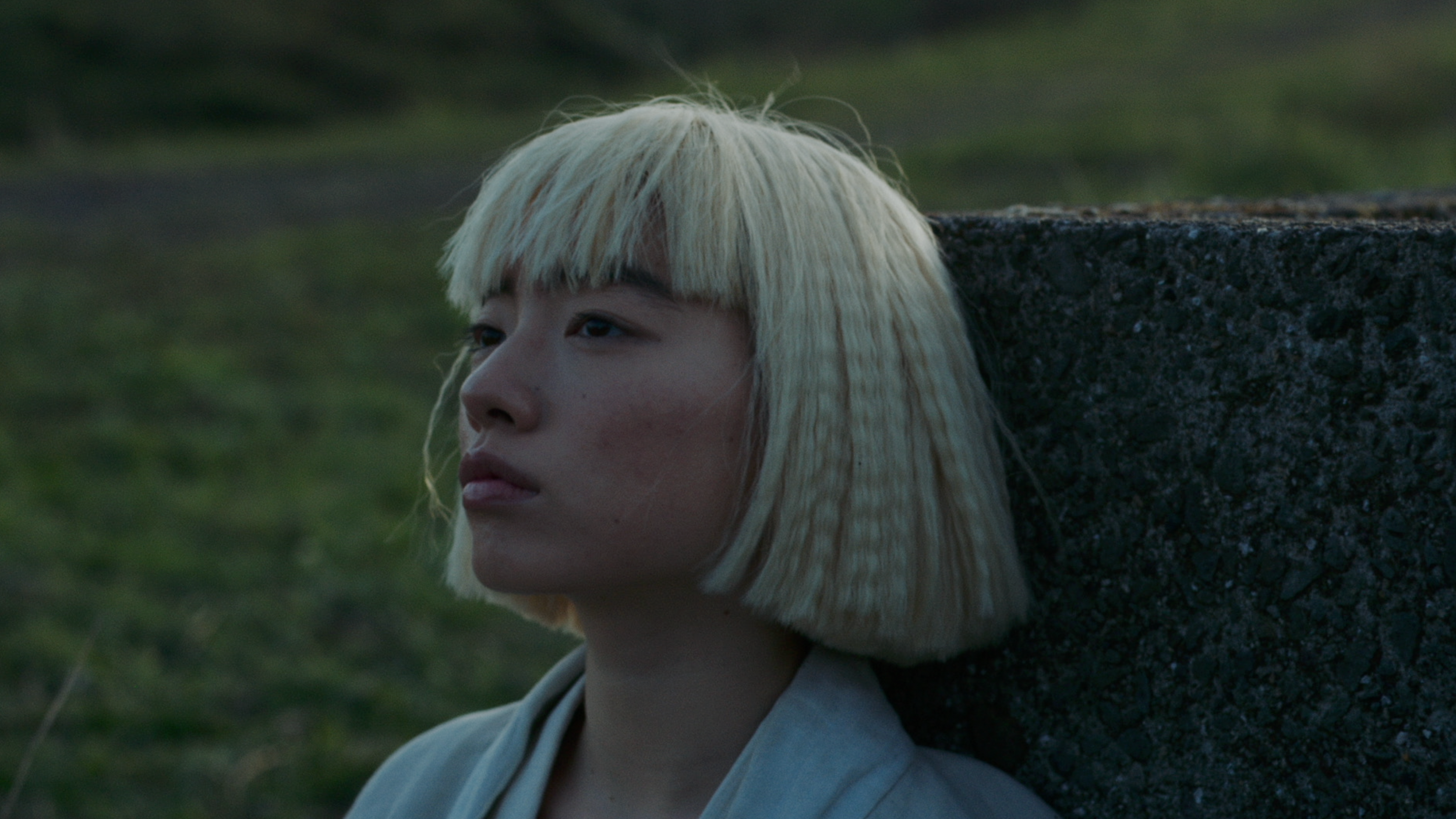
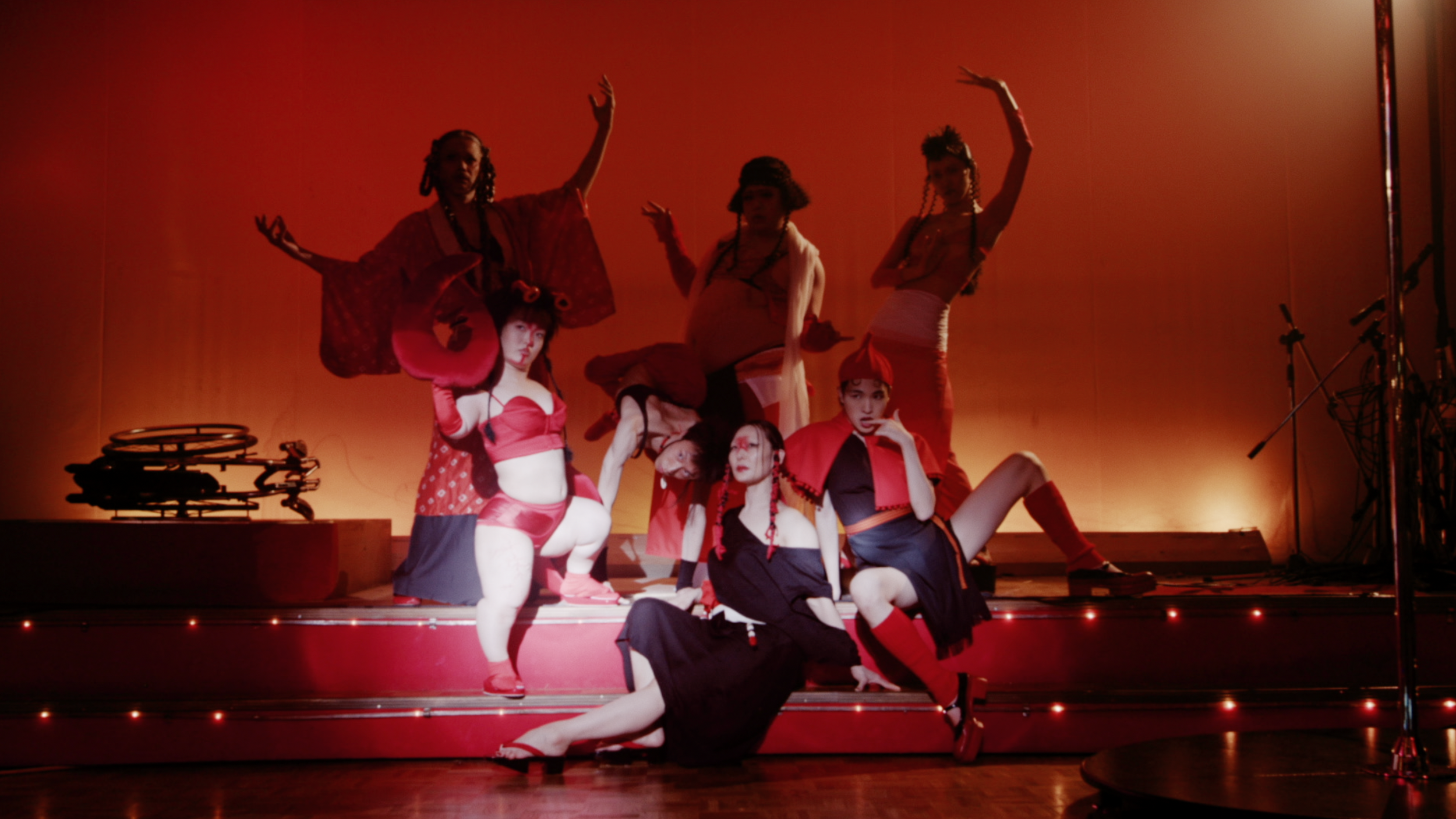
Thundergod is a narrative experimental film set in a make-believe mountain village isolated from the outside world by frequent lightning strikes. One day, a young woman named Aoi appears in the village with dreams of dancing at an exclusive underground club open only to lightning strike survivors. Aoi wanders the village in a desperate daze, torn between life and death. The villagers she meets are split between those who live in fear of lightning strikes, and others who look to lightning as a harbinger of good fortune.
Dir. Umi Ishihara
Featuring Aoi Yamada and Tokyo QQQ
Producer: Oscar Nielsen
DOP: Asumi Sako
Official Selection: Locarno Film Festival 2026
World premiere: Sapporo International Short Film Festival & Market 2025 (Japan Premiere Award)
International premiere: Beijing International Short Film Festival 2025
Selected film festival: Festival Regard 2026
On Umi Ishihara's Thundergod Text by Yuki Saiki (Curator) 日本語訳
"This is the place in Japan where lightning strikes most frequently. Always living on the edge of danger, outcasts come together to survive." — Thundergod by Umi Ishihara begins with this monologue. The film's strength lies in its straightforward narrative, reminiscent of traditional folktales.
Jean-François Lyotard (1924–1998) referred to the universal narratives used to legitimise science and the Enlightenment’s reason in society as Grand narratives (grands récits)[1]. These are ideologies that "promise the salvation of all humanity through their fulfillment" (Ishige 2007, p. 58) and present a singular vision of history and society. However, Lyotard argued that the credibility of these grand narratives, which provide the foundation for universal scientific theories and moral judgments, has already been lost. He termed the world following the end of grand narratives as Postmodern[2]. In contrast to grand narratives, the stories emerging in the postmodern world are Little narratives (petits récits), which can be characterised as discourses that "attempt to tell the stories that grand narratives could not" (Ishige 2007, p. 63).
The little narratives that appear here are diverse. For instance, Ishige exemplifies "the female counter-argument to a male-centered historical perspective" and "postcolonial critiques that question Western-centric historiography" as little narratives (Ishige 2007, p. 62). In addition to these, critiques towards heterosexism, which excludes individuals with sexual orientations other than heterosexuality, ableism based on physical and intellectual abilities, and linguistic imperialism: where specific languages, such as English, dominate politically and culturally can also be considered little narratives. Furthermore, a political stance that emphasises protecting the unique lives and livelihoods of individuals rather than focusing on large-scale territorial invasions or genocides may also fall within the scope of little narratives.
[1] The term "metanarrative" (métarécit) is also sometimes used with a similar meaning. For a summary of the concept of "grand narratives," refer to Ishige (2007).
[2] This phrase is used as a key term not only in philosophy but also in discussions of contemporary art. According to Ishige, the terms postmodern/modern are not temporal distinctions but rather concepts employed to interpret different systems of thought (Ishige 2007, pp. 63-65).
Looking back, what kind of narrative emerges in Thundergod? In several interviews, Ishihara has made it clear that the core of her work is a "story that can be understood by a wide range of people."
I feel that today's society is facing politically difficult times. It is precisely because of such an era that "being understandable to a wide range of people" is important. (Ishihara & Saiki, 2018)
As much as possible, I want to create a society where no one gets hurt, even a little, and where vulnerable people can live as they are. To achieve this, I strongly feel that we need to raise our voices and create works that include those voices. (Ishihara & Nonaka, 2019)
The "story that can be understood by a wide range of people" [3]that Ishihara envisions likely refers to a narrative that resonates with "outcasts": those who have been rendered invisible by traditional society, or those who carry deep emotional or physical wounds. The underground club that appears in Thundergod seems to symbolise a world detached from the societal ideals pursued by traditional grand narratives. It may even be a place that is occasionally shunned. On the other hand, the figure of Aoi, who fervently wishes to be struck by lightning to change her fate, and the heartfelt cry of "Lightning, come!": a call born from belief in tradition expresses a raw desire to step outside the confines of the grand narratives that regulate society's universal norms. The legend that being struck by lightning changes one’s life might be simple, perhaps even too unrefined a narrative. Yet, for Aoi, that very legend is her sole source of hope, and it is within this simple story that she finds a sense of belonging for her soul.
What emerges here could be described as the presence of a new grand narrative that encapsulates certain little narratives. To put it more boldly, the essence of Ishihara's storytelling contains a rewriting of the postmodern schema that shifts from the grand narratives to the little narratives following the end of the former. This can also be understood as an act of breaking down the grand narratives that once underpinned global trends, while reaching out to those who have previously been unheard. The iconoclastic depiction in the final scene of Thundergod could be seen as symbolising this process of destruction and creation. What this work suggests is a portrait of individuals who, in order to survive within the fragmented worlds underpinned by little narratives: worlds that once were rendered invisible within the grand narratives cling to a new, expansive narrative as a source of solace.
[3] In recent years, Ishihara has begun using the phrase "a difficulty level that high school students with their antennas up can barely understand" (Shiozuki, 2024, p. 6), which he encountered in Shiozuki’s essay, to express the details of "a story that can be understood by a wide range of people."
Author: Yuki Saiki, October 16, 2024, while listening to Godspeed You! Black Emperor's BABYS IN A THUNDERCLOUD.
References
Lyotard, Jean-François. 1979. La condition postmoderne: Rapport sur le savoir. Paris: Les Éditions de Minuit. (Lyotard,
Jean-François. 1984. The Postmodern Condition: A Report on Knowledge. Translated by Geoff Bennington and Brian
Massumi. Minneapolis: University of Minnesota Press.)
Ishige, Yumi (2007). "Jean-François Lyotard’s Grand and Little Narratives: Definitions and Potential for Development."
Ryukoku Journal of Philosophy, vol. 21, pp. 53–76.
Nonaka, Momo and Umi Ishihara (2019). "Why Make a Girls' Movie in a Nightmare-like Reality? Umi Ishihara's Feature
Debut Film Garden Apartment." GINZA, 14 June. 2019, ginzamag.com/categories/culture/117448. Accessed 15 Oct. 2024.
Saiki, Yuki and Umi Ishihara (2018). "A Collection of 'Narrative Moments' Scattered Across Southeast London: Umi
Ishihara Talks About Life Studying Abroad in London." Partner, partner-web.jp/article/?id=2036. Accessed 12 Oct. 2024.
Shiotsuki, Yoko (2024). "The Letters Played in the Bedroom Dance in Spirals." In Madoka Shitone, Cyborg Witch Manifesto,
pp. 6-15, BCCKS.